

Access problems narrow streets Lambeth rubbish tips
Posted on 26/06/2026

Access Problems Narrow Streets Lambeth Rubbish Tips: A Practical Guide for Tight London Streets
If you have ever tried to get bulky rubbish out of a flat, a maisonette, or a back-garden store in a narrow Lambeth street, you already know the feeling: the van arrives, everyone looks at the kerb, and suddenly access is the whole story. Access problems on narrow streets in Lambeth can turn a straightforward rubbish removal into a slow, awkward job if the plan is not right from the start. The good news is that with a bit of preparation, most delays can be avoided.
This guide explains what access issues really mean, why they matter in Lambeth, how professional rubbish collection usually works in tight streets, and what you can do to make everything smoother. We will also cover common mistakes, useful checks, and a simple step-by-step approach you can use whether you are clearing a single sofa or a full property. To be fair, the awkward bits are usually predictable once you know what to look for.
Why Access Problems Narrow Streets Lambeth Rubbish Tips Matters
Lambeth has a lot of streets where space is at a premium. That is part of the charm, honestly, but it does make rubbish clearance more complicated. Think of parked cars lining both sides of the road, low hanging branches, short front gardens, shared entrances, basement steps, and turnings that barely leave room for a van to pause. In those situations, access is not a side issue. It is the job.
When access is poor, small problems become bigger ones. A collection that should have taken twenty minutes can turn into repeated trips, extra carrying distance, more labour, and sometimes the need for different equipment or a smaller vehicle. If the waste is heavy, awkward, or simply too far from the roadside, the wrong setup can waste time for everyone. And nobody wants a crew stood around in the rain while they work out how to move an old wardrobe through a hallway that seems to have been built for bicycles only.
Good planning matters for residents, landlords, letting agents, builders, office managers, and anyone arranging a clear-out in a dense London neighbourhood. It protects time, reduces avoidable charges, and helps the job run safely. It also makes neighbour relations easier. Let's face it, no one wants to block a narrow street in Lambeth any longer than necessary.
There is another layer too: the better the access plan, the easier it is to separate reusable, recyclable, and general waste streams. That links directly with responsible disposal practices and cleaner collections overall. If you are trying to make a job more efficient, it is worth understanding the wider process, not just the lifting part. For a broader look at how services fit together, the services overview is a useful place to orient yourself.
How Access Problems Narrow Streets Lambeth Rubbish Tips Works
The phrase sounds clunky, but the process is simple enough once broken down. A rubbish clearance team looks at three things: the waste itself, the route to the waste, and the route from the property to the vehicle. In narrow Lambeth streets, that route can be the hard part.
Access problems usually show up in one of these forms:
- the vehicle cannot park close to the property
- the road is too tight for larger trucks
- stairs, basement entries, or shared hallways slow loading
- gates, bollards, or permit-controlled streets limit stopping time
- large items need to be dismantled before they can be moved
- parking pressure means the crew must carry waste a longer distance
In practical terms, that means a company may need a smaller vehicle, more crew members, earlier access, or a more detailed collection plan. Sometimes the right answer is as simple as moving items to the front boundary before the team arrives. Other times the job needs a staged approach, especially with bulky furniture disposal or loft clearance where the bulky stuff only looks simple from downstairs.
The best results usually come from a pre-visit description or very clear photos. A good provider will want to know whether the waste is upstairs, in a rear garden, behind a locked entrance, or in a building with a shared passage. If the street is especially tight, it is also helpful to mention turning space, parking restrictions, and whether there is room to open a tail lift or load safely from the kerb.
That is why service-specific planning matters. For example, rubbish collection in Lambeth will often be more straightforward when access is easy, but the same job in a tight cul-de-sac can need a different approach altogether. Likewise, a domestic clear-out and a house clearance in Lambeth do not have the same access challenges, even if the waste pile looks similar at first glance.
Truth be told, most access issues are not dramatic. They are just annoying. But in this type of work, annoying can become expensive if nobody flags it early.
Key Benefits and Practical Advantages
When you handle access properly, the gains are immediate. The job tends to be quicker, safer, and cleaner. You also reduce the chance of last-minute surprises, which is probably the biggest win of all.
- Fewer delays: The crew can arrive ready for the actual conditions rather than guessing on the day.
- Less manual carrying: Shorter carry distances reduce strain and save time.
- Better cost control: Clear access details reduce the risk of extra labour or wasted call-out time.
- Safer handling: Tight routes and awkward lifting become easier to manage when planned.
- Smoother neighbour relations: Less blocking, less noise, less frustration in the street.
- Cleaner job outcomes: Waste is less likely to be left behind because access was underestimated.
There is also a psychological benefit, which sounds minor until you are in the middle of a clear-out. People feel less overwhelmed when the access problem is named early. Once you know the route and the constraints, the whole job feels more manageable. That applies whether you are clearing builder's rubble, an old wardrobe, or the contents of a rented flat after a move.
If you are comparing service types, you may also find that specific solutions are better suited to certain access conditions. For instance, furniture disposal in Lambeth is often the right fit for one-off bulky pieces, while builders waste disposal in Lambeth may be more appropriate when access is cramped but the waste is lighter, bagged, or already stacked near the exit.
Who This Is For and When It Makes Sense
This topic matters to more people than you might think. The obvious group is residents in terraced streets, mansion blocks, flats above shops, and basement homes. But access problems affect landlords, estate agents, builders, office managers, and anyone dealing with an awkward load-out in a busy part of Lambeth.
It makes particular sense to focus on access when you are:
- clearing bulky household items from a narrow frontage
- moving waste from a rear alley, garden, or shared passage
- arranging rubbish removal from upper-floor flats
- managing waste after refurbishment or decorating work
- trying to clear a property before sale, handover, or new tenants
- handling mixed waste where sorting takes time on site
Residents often discover access issues during the stressful part, which is usually after the clutter has already built up. That is when a clear plan helps most. If you are living in or around Lambeth and want a grounded sense of local conditions, the article on Lambeth living advice from residents gives a useful picture of day-to-day realities in the area.
Property owners and agents also need to think ahead. If a flat is being prepared for market or a rental changeover, access constraints can affect timing and presentation. There is a good reason many people dealing with property turnover also read mastering real estate purchases in Lambeth or lambeth sell property efficiently alongside clearance advice. It all connects in the real world, even if the subjects are different on paper.
Step-by-Step Guidance
Here is a simple way to approach rubbish clearance in a narrow Lambeth street without making life harder than it needs to be.
- Map the route from waste to vehicle. Start at the item, not the street. How many stairs, doors, corners, and narrow points are involved?
- Check what is actually bulky. A mattress is awkward but flexible. A wardrobe with fixed doors is a different story.
- Identify parking and stopping limits. If the vehicle cannot stop close by, the carry route changes the whole job.
- Take a few honest photos. Wide shots and one or two close-ups are usually enough. No fancy staging required.
- Separate items that may need dismantling. Table legs, bed frames, shelving, and large cabinets often move better in pieces.
- Tell the provider about barriers. Gates, intercoms, loading restrictions, locked communal areas, and tight stairwells all matter.
- Prepare the waste the day before. If possible, get items to a more accessible point so the collection can start fast.
- Ask about the fallback plan. What happens if the largest vehicle cannot access the street? A good operator should be able to explain this clearly.
A small real-world example: someone clearing a second-floor flat near a busy Lambeth junction might assume the main issue is the lift. Often it is not. The lift might be fine. The real problem is the meter of space left after two parked cars, a delivery van, and a bin lorry all compete for the same bit of kerb. That is the sort of detail that changes the entire day.
If you are dealing with mixed household items and want a broad clearance approach rather than a single-item pickup, waste clearance in Lambeth can be a sensible option because it allows more flexibility when access conditions are not ideal.
Expert Tips for Better Results
These are the little things that make a surprisingly big difference.
1) Measure the obvious things, then measure the awkward ones.
Door width, stair turns, communal corridor space, and the gap between railings matter more than people expect. If an item is longer than the landing, that is useful to know before collection day.
2) Keep the route clear.
Even a tidy hallway can become a bottleneck if shoes, prams, recycling boxes, or building materials are left in the way. A clean route is a safe route. Simple, but easy to miss.
3) Separate fragile from heavy.
When access is tight, mixing glass, loose ceramics, and sharp construction offcuts into one pile just adds risk. Keep the load organised. It saves time, oddly enough.
4) Plan for one-way movement.
If waste must pass through a narrow hallway, make sure the route is not also being used for moving people, pets, shopping, or a thousand other daily interruptions.
5) Be realistic about timing.
Early morning can be calmer in some streets; lunchtime can be chaos. In Lambeth, traffic and parking pressure can change quickly, so a little flexibility helps.
6) Ask the right question.
Not "Can you take this?" but "Can you take this from where it is, in this street, with these access conditions?" That one change in wording often gets you a much better answer.
And yes, sometimes the answer is that a van cannot just magic itself into a gap the size of a skipping rope. The joke writes itself, really.

Common Mistakes to Avoid
Most access issues become expensive because of one of these mistakes:
- Leaving access details until collection day. By then, the crew is already on site and options are limited.
- Assuming small jobs never need planning. A single bulky item can still be difficult if it is at the end of a long carry route.
- Ignoring parking reality. A "quick stop" is not always possible on a busy Lambeth road.
- Forgetting internal obstacles. Narrow stairs, low ceilings, and shared hallways are often the real problem.
- Not checking whether items need dismantling. This is a common one. A bed base may need to come apart before it can leave the room.
- Mixing the wrong types of waste. Builder's waste, furniture, and garden waste may need different handling.
There is also a quieter mistake: choosing the cheapest quote without explaining the access properly. That can look clever on paper and then become awkward in practice. If you want to understand how pricing can change when access is harder than expected, the article on avoiding hidden rubbish charges in Lambeth is worth a read.
One more thing. People often overestimate what can be carried in one go. Heavy items are not just about weight. Balance, grip, cornering, and the route all matter. That is especially true in older Lambeth buildings where staircases can be steep or just slightly odd in ways only old London buildings seem to manage.
Tools, Resources and Recommendations
You do not need specialist equipment to prepare for access-heavy collections, but a few simple tools and habits help a lot.
- Measuring tape: useful for doorways, stair turns, and item dimensions.
- Phone camera: clear photographs are often better than long explanations.
- Basic screwdriver or Allen key: helpful for dismantling flat-pack furniture or bed frames.
- Work gloves: good for handling rough edges, broken materials, and garden waste.
- Labels or sticky notes: useful if items are being separated into keep, recycle, and remove piles.
- Strong bin bags or boxes: handy for small loose waste that would otherwise clutter the route.
From a service perspective, it also helps to know which type of clearance best matches the job. For example, loft clearance in Lambeth usually needs more careful route planning than a ground-floor collection, while office clearance in Lambeth often involves shared building access, lifts, and reception rules. Small details, but they matter.
If the waste is garden-related, access can be just as awkward in side returns and rear passages. In those cases, garden waste removal in Lambeth may be the right fit, especially where bins, branches, and soil bags need to pass through tight spaces.
For people who care about what happens after collection, it is also sensible to look at recycling practices and responsible disposal. The company's recycling and sustainability information is useful if you want a clearer sense of how reuse and recycling are approached.
Law, Compliance, Standards, or Best Practice
Access planning is not just about convenience. It also ties into safety, duty of care, and sensible waste handling. In the UK, the broad expectation is that waste is carried, stored, and removed responsibly, with attention to safe handling and correct disposal. You do not need to be a compliance specialist to benefit from that, but it helps to work with a provider that treats these duties seriously.
In practical terms, good best practice usually includes:
- clear communication before the job starts
- honest description of access limitations
- safe manual handling and sensible crew allocation
- appropriate vehicle choice for the street and load
- respect for neighbours, shared spaces, and parking restrictions
- responsible separation of reusable and recyclable materials where possible
If a collection is being arranged in a shared building, accessibility matters too. People with mobility needs, prams, delivery access, or narrow communal routes can all be affected by poor planning. For a company-led perspective on inclusive access, the accessibility statement is a reassuring sign that a business is thinking about users beyond the simplest scenario.
Safety is another big one. A good team should not force awkward lifting through a route that is clearly unsafe. Sometimes the right decision is to pause, reassess, and choose a safer method. It might feel slower in the moment, but it is usually the right call. There is no prize for bending a wardrobe and your back at the same time.
If you are booking a paid service, it also helps to understand the terms, payment expectations, and who is responsible for what before the crew arrives. That is basic good practice, really. Pages such as terms and conditions, payment and security, and privacy policy are all relevant if you want the admin side to be as clear as the clearance itself.
Options, Methods, or Comparison Table
Different access situations call for different methods. The right choice depends on the size of the waste, the building layout, and how much time you want to spend on the day.
| Method | Best for | Strengths | Limitations |
|---|---|---|---|
| Kerbside collection | Easy access streets with nearby parking | Fast, simple, low carrying distance | Not ideal where parking is limited or waste is upstairs |
| Manual carry-out from property | Flat clear-outs and mixed household waste | Flexible and works in awkward buildings | Slower and more labour intensive |
| Pre-staged waste at entrance | Properties with a safe front or rear staging point | Reduces collection time and access pressure | Requires planning and secure placement |
| Dismantled-item removal | Bulky furniture, beds, wardrobes, shelving | Makes narrow routes manageable | Needs tools and extra preparation |
| Specialist collection plan | Complex access, heavy items, multi-storey properties | Most adaptable, safest for awkward jobs | May take longer to arrange |
For a lot of Lambeth properties, the best option is not the most dramatic one. It is simply the one that matches the space. A flat on a narrow road might benefit from staged items and a smaller vehicle, while a basement property might need a carry plan that looks almost boring on paper. Boring is good. Boring means smooth.
Case Study or Real-World Example
Here is a realistic example drawn from the sort of jobs that come up all the time.
A resident in a Lambeth side street had a mix of old chairs, a wardrobe, a broken desk, and several bags of general waste after a room renovation. The road was narrow, parking was tight, and the flat was on the first floor with a shared staircase. At first glance, the job seemed straightforward. But the access route added extra time, especially because the wardrobe would not fit through the landing in one piece.
The solution was simple once the issue was identified early. The wardrobe was dismantled, the waste was staged near the entrance, and the collection team used a smaller vehicle positioned where it could safely stop without blocking the street. The result was a faster job, less lifting, and no awkward last-minute reshuffling. A bit of planning changed the whole mood of the day.
That kind of situation is very common in Lambeth, especially around streets where the layout feels beautifully old-fashioned but not particularly generous with parking. In those cases, the difference between a messy clearance and a smooth one is usually the preparation, not the physical size of the waste pile.
If you want a more location-specific sense of this in a built-up part of the borough, Vauxhall flats rubbish clearance SE11 access tips and rubbish clearance SE11 near Lambeth Palace made easy both sit naturally in the same practical territory.
Practical Checklist
Use this checklist before the collection day. It keeps things calm.
- Have you checked the width of the route from the waste to the street?
- Do you know whether the vehicle can stop close enough to load safely?
- Have you flagged stairs, tight corners, gates, or locked entries?
- Have you told the provider if items need dismantling?
- Are any items especially heavy, fragile, or awkwardly shaped?
- Have you moved loose waste away from the route?
- Have you taken photos of the access point and the waste?
- Do you know whether parking restrictions apply at the scheduled time?
- Have you separated items that can be recycled or reused where practical?
- Have you confirmed the collection plan and any likely constraints?
If you can tick most of those off, you are already in a much better position than many people who book in a rush and hope for the best.
Get a free quote today and see how much you can save.
Conclusion
Access problems in narrow Lambeth streets are not unusual, but they are manageable. Once you understand how parking pressure, tight hallways, staircases, and vehicle access shape the job, the rest becomes much easier to plan. The smartest approach is always the same: describe the access honestly, prepare the route, and choose the right collection method for the space you actually have.
That little bit of care saves time, reduces stress, and usually improves value too. It also makes the whole experience feel more respectful to everyone involved, from neighbours on the street to the crew doing the lifting. And in a borough like Lambeth, where every street seems to have its own personality, that kind of planning goes a long way.
So if the route looks awkward, do not panic. Just plan it properly. A calm start usually leads to a calm finish, and that is worth a lot.
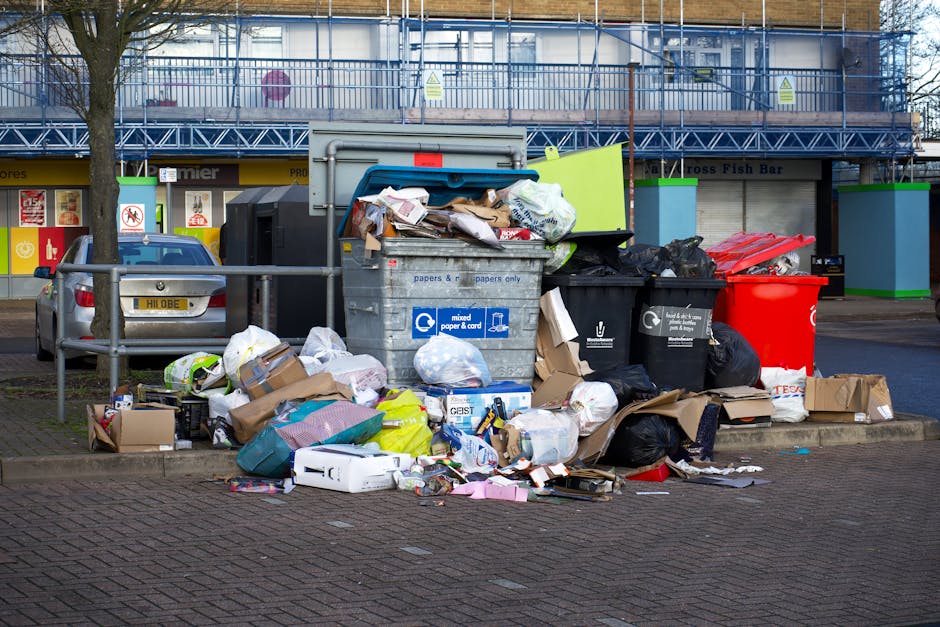
 Tipper Van - Rubbish Removal and Waste Clearance Prices in Lambeth, SW9
 Luton Van - Rubbish Removal and Waste Clearance Prices in Lambeth, SW9

