

Lambeth Council rules for bulky rubbish and fines
Posted on 06/07/2026
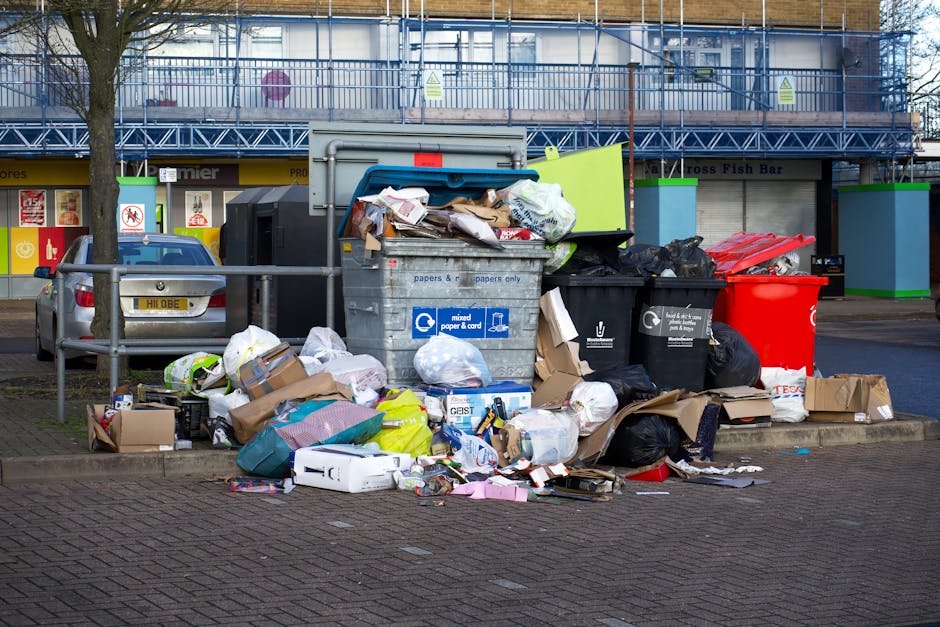
Lambeth Council rules for bulky rubbish and fines: what residents and landlords need to know
If you have a sofa blocking the hallway, a broken wardrobe in the front garden, or a pile of renovation offcuts waiting for "later", it can be tempting to put bulky rubbish out and hope for the best. In Lambeth, that can turn into a fine, a collection issue, or an awkward chat with the neighbours rather quickly. This guide explains Lambeth Council rules for bulky rubbish and fines in plain English, so you can avoid penalties, understand what counts as bulky waste, and choose the cleanest, safest way to get it removed.
We'll cover the practical side too: how bulky waste collection usually works, what mistakes lead to enforcement problems, when a private clearance makes more sense, and how to keep things moving if you live in a flat, a narrow street, or a busy block where access is a pain. Let's face it, waste is never glamorous. But getting it wrong can be expensive.
Why Lambeth Council rules for bulky rubbish and fines matters
Bulky rubbish is not just "big rubbish". In a borough like Lambeth, it is anything too large for normal household bins and collections, such as mattresses, wardrobes, fridges, bed frames, armchairs, tables, and other awkward items. The rules matter because bulky items left in the wrong place can block pavements, attract fly-tipping complaints, and create a safety issue for pedestrians, wheelchair users, parents with buggies, and delivery crews.
There's also the fine angle. Councils across London take waste dumping seriously, and Lambeth is no exception. If bulky waste is put out incorrectly, abandoned on the street, or handed to an unlicensed collector, the result can be enforcement action. In everyday terms, the risk is simple: if waste is not collected lawfully and promptly, you may end up paying more than you expected.
In our experience, most problems start with a small assumption: "It'll be fine for a day" or "someone will probably take it". That one-day delay can turn into a complaint from a neighbour, a warning, or a penalty notice. And once the mess is photographed and reported, the story gets a lot less casual.
If you are also dealing with a move, a refurbishment, or a property sale, timing becomes even more important. Articles like mastering real estate purchases in Lambeth and selling property efficiently in Lambeth show how quickly household admin stacks up when deadlines are tight. Waste is one of those things people underestimate until the hallway is full.
How Lambeth Council rules for bulky rubbish and fines works
At a practical level, the process usually comes down to three questions: what the item is, how it is presented for collection, and who is responsible for removing it. The rules are not hard to understand, but they do expect residents to follow the system rather than improvising. That is where many fines start.
Here is the general shape of how things work in a borough setting:
- Identify the item correctly. Is it a bulky household item, builder's debris, garden waste, or electrical waste? Different waste types often need different handling.
- Choose a lawful route. Use the council's bulky waste service where available, book a licensed private clearance, or take items to an appropriate reuse/recycling route if that is practical.
- Present the waste properly. Items should not block pavements, exits, communal walkways, or emergency access points.
- Keep records where possible. If a professional collects the items, keep the booking details and any confirmation. It sounds boring. It is useful.
- Avoid leaving waste unattended. Bulky rubbish left out too early, or on the wrong date, can be treated as an environmental nuisance or worse.
That distinction between "placed out for collection" and "abandoned" is important. A sofa waiting for a booked collection is one thing. A sofa dumped by a bin store with no booking, no label, and no clear owner looks very different.
Private clearance services are often worth considering when the job is too large, too urgent, or too awkward for standard council arrangements. If you want a sense of the broader options, see the services overview and the page on waste clearance in Lambeth. Those pages help show the difference between a simple collection and a full clearance job.
Key benefits and practical advantages
Following the rules is not only about avoiding fines. It also makes the whole process easier, cleaner, and less stressful. A tidy waste plan has a way of making the rest of the day feel manageable again, which is no small thing when you're trying to get a flat ready for new tenants or clear out a house after a long spell of storage.
- Lower risk of penalties. Correct disposal reduces the chance of being accused of fly-tipping or improper presentation of waste.
- Better kerbside etiquette. Your street stays walkable and your neighbours stay happier. That matters more than people admit.
- Faster clearing. A properly arranged collection is usually quicker than waiting on ad hoc decisions.
- Less stress around access. If you live in a narrow street or a block with limited access, planning ahead helps a lot.
- Safer handling of heavy items. Large furniture and white goods can injure people or damage walls and floors if moved badly.
There is a commercial side too. If you are a landlord, agent, or homeowner preparing to market a property, waste issues can delay viewings and create a poor first impression. For related local reading, Lambeth living advice from residents gives a grounded feel for everyday local realities, while discovering the beauty of Lambeth in London reminds you how much presentation matters in this part of town.
Expert summary: In Lambeth, bulky waste becomes a problem when it is left unmanaged, poorly timed, or handed to the wrong collector. The safest route is the one that is booked, traceable, and suited to the type of waste you have.
Who this is for and when it makes sense
This topic matters to a lot of people, not just homeowners with an old mattress to shift. In fact, the common scenarios are broader than you might think.
- Tenants clearing out at the end of a lease.
- Landlords dealing with items left behind after a move-out.
- Homeowners tackling loft clutter, garage items, or old furniture.
- Letting agents arranging end-of-tenancy clearances.
- Small businesses removing office furniture or old stock.
- Builders and tradespeople managing leftover materials from a project.
It also makes sense for anyone living in a flat where access is awkward. If you are on an upper floor, in a block with a tight lift, or on a road where parking is never straightforward, the logistics can be more troublesome than the waste itself. That is exactly why content like Vauxhall flats rubbish clearance SE11 access tips and access problems and narrow streets in Lambeth is useful; access is often the real issue, not the rubbish.
If your job is a single bulky item, the council route may be enough. If you have multiple items, mixed waste, stairs, or a same-day deadline, a private team may be the calmer option. Truth be told, "one sofa" can quickly become "one sofa, a broken desk, three bags, and a lamp nobody claimed".
Step-by-step guidance
Here is a straightforward way to deal with bulky rubbish in Lambeth without wandering into fine territory.
- Sort the waste into categories. Separate furniture, electrical items, garden waste, builders' waste, and general junk. This makes the job easier to book and safer to handle.
- Check what can be reused or donated. If an item is still usable, passing it on can be better than paying for disposal. Not everything old is waste.
- Decide whether the council route is suitable. For a small number of items, this may be fine. For mixed or urgent loads, consider a professional clearance.
- Measure access points. Stairs, lifts, alleyways, and parking spaces can make or break a collection.
- Book the collection properly. Use the correct service and give accurate details. Guessing is a bad strategy here.
- Move the items only when instructed. Do not put them out days early unless the service specifically says to do so.
- Keep the area tidy. Remove loose screws, glass, or spillable items. A neat pile is easier to collect and less likely to annoy neighbours.
- Confirm completion. Once collected, check that nothing was left behind and that the area is safe again.
If you are booking a paid collection, it helps to look at pricing and quotes before you commit. And if you are comparing payment methods or want to be sure your details are handled properly, the page on payment and security is worth a quick look.
One tiny but important note: take photos before and after. Not because you expect drama, but because waste jobs have a funny habit of becoming "who left this here?" conversations later.
Expert tips for better results
These are the small things that tend to make a big difference.
- Book before the weekend rush. Fridays and Mondays can get busy, especially if you are coordinating with other moves or works.
- Don't leave items half-prepared. A drawer full of loose bits or a cabinet with hidden glass makes collection slower and riskier.
- Check for embedded hazards. Old furniture may have sharp fixings, broken parts, or hidden waste inside. Yes, people do store odd things in sofas.
- Keep pathways clear. A clean route from the room to the exit saves time and reduces damage.
- Match the service to the waste type. Builders' debris is not the same as domestic furniture. If in doubt, say so clearly when arranging the job.
- Plan for parking and access early. In London, this is rarely a trivial detail.
If your removal is tied to a property refresh, a house clearance, or a last-minute turnaround, some related pages can help you think more clearly about the wider job: house clearance in Lambeth, furniture disposal in Lambeth, and loft clearance in Lambeth. Those services overlap in real life more than people expect.
And if a bulky item has to come out quickly because a tenant is moving in tomorrow, don't pretend time is on your side. It usually isn't.

Common mistakes to avoid
Most fines and disputes around bulky rubbish come from avoidable mistakes. The good news? They are easy enough to sidestep once you know what to watch for.
- Leaving items on the street too early. This is one of the quickest ways to cause complaints or enforcement attention.
- Using an unlicensed collector. If a waste carrier is not properly authorised, the waste may be fly-tipped later and the original owner can still be asked questions.
- Mixing different waste types. Builders' waste, electricals, and furniture can trigger different handling needs.
- Underestimating volume. A job that looked like "just a few things" often turns into a fuller load once everything is gathered together.
- Ignoring access issues. Tight staircases, no parking, or long carry distances can slow things down or increase cost.
- Forgetting about shared spaces. Bin stores, front gardens, and communal walkways are not neutral ground. Someone always notices.
A classic example: someone clears a flat in SE11, leaves a sofa and a mattress by the entrance because collection is "later today", then the timing slips and the items sit there overnight. By the next morning, the problem is no longer the sofa. It's the complaint. If that sounds familiar, rubbish clearance SE11 near Lambeth Palace made easy and common mistakes when booking rubbish collection in Lambeth are both worth a read.
Tools, resources and recommendations
You do not need fancy equipment to handle bulky waste well, but a few practical tools make life easier:
- Measuring tape for doors, stairwells, and furniture dimensions.
- Gloves and sturdy shoes for safe movement of sharp or dirty items.
- Protective floor coverings when removing heavy pieces through a property.
- Phone camera for before-and-after records.
- Labels or marker pens to identify what is to be kept, donated, recycled, or removed.
On the planning side, the most useful resources are the ones that help you compare service types and understand the wider disposal picture. For instance, recycling and sustainability is a good reminder that disposal should not automatically mean landfill, while insurance and safety matters if items are heavy, awkward, or being moved through tight spaces.
If you want to see how different services fit together, the clearer pages are often the most helpful. builders' waste disposal in Lambeth, garden waste removal in Lambeth, and office clearance in Lambeth each cover a different kind of clean-up, and that helps you avoid booking the wrong thing.
For general company detail, policies, and trust signals, you can also look at about us, terms and conditions, privacy policy, cookie policy, accessibility statement, and modern slavery statement. Those pages are not about bulky waste itself, but they help round out a trustworthy website experience.
Law, compliance, standards, or best practice
Bulky rubbish disposal sits inside a broader legal and practical framework in the UK. You do not need to memorise legislation to stay safe, but you do need to understand the basic expectations.
In simple terms, the person producing the waste remains responsible for it until it is lawfully collected or taken to the right place. That means you should take care over who handles it, how it is presented, and whether the route is appropriate for the waste type. If a collector cannot show that they operate properly, that is a red flag. A very ordinary red flag, but still a red flag.
Good practice usually includes the following:
- using a licensed and traceable collection route;
- keeping waste off pavements and out of communal areas unless instructed for collection;
- separating hazardous or specialist items;
- avoiding any arrangement that looks informal, cash-only, or unclear;
- protecting shared entrances and fire exits;
- making sure the waste does not create a nuisance for neighbours or passers-by.
If a penalty is issued, the safest response is to read it carefully and act promptly. Do not ignore it and hope it evaporates. That approach rarely works out well, on waste issues or anything else, really.
For people handling lots of waste during moving or renovation, a proper disposal plan often supports the rest of the job. That is especially true in property-heavy areas, where timing, presentation, and safety all matter. There is a reason local residents, landlords, and sellers often treat clearance work as part of the move rather than an afterthought.
Options, methods, or comparison table
Not every bulky waste job needs the same solution. Here is a simple comparison to help you choose the most sensible route.
| Option | Best for | Pros | Trade-offs |
|---|---|---|---|
| Council bulky waste collection | A small number of household bulky items | Usually straightforward; suitable for basic domestic jobs | May be less flexible on timing, item type, or access quirks |
| Private bulky waste collection | Urgent, mixed, or awkward loads | More flexible; can handle more varied jobs | Cost depends on volume, access, and waste type |
| Full house clearance | End-of-tenancy, probate, downsizing, or major declutter | Efficient for larger jobs; less hassle overall | Can be overkill for one or two items |
| Reuse or donation route | Items still in good condition | More sustainable; avoids disposal where possible | Not suitable for damaged, dirty, or unsafe items |
One practical rule of thumb: if you need someone to handle the lifting, the sorting, the carrying, and the disposal in one go, you are probably in clearance territory rather than simple collection territory. That distinction saves misunderstandings.
Case study or real-world example
Picture a typical Lambeth flat move-out. The tenant has a dismantled bed frame, a mattress, a broken chair, and a small office desk. At first glance it feels manageable. Then the building rules come into play: no items in the corridor, limited parking, and a narrow stairwell that turns sharply on the second floor. Suddenly, "just leave it outside" is not an option.
The sensible approach is to photograph the items, check access, and decide whether council collection or a private clearance is the better fit. In this sort of setup, a private team can be the simpler option because they can time the collection around access, lift use, and carry distance. That avoids the half-finished staging area that so often annoys neighbours.
We have seen versions of this in places where access matters just as much as disposal. The practical advice in bulky rubbish collection near Clapham Common and Vauxhall flats rubbish clearance SE11 access tips reflects the same reality: the fewer assumptions you make, the smoother the job goes.
In that example, the key win is not just removing the furniture. It is avoiding a block entrance complaint, missing the move-out deadline, or leaving waste exposed overnight. Small details. Big difference.
Practical checklist
Use this checklist before you put anything out for collection or book a clearance.
- Have I identified the waste type correctly?
- Am I sure this item can go with my chosen collection method?
- Have I measured the doors, stairs, or lift access?
- Is there enough parking or loading space?
- Have I separated reusable items from true waste?
- Do I know the exact collection date and time window?
- Will the items block pavements, exits, or communal walkways?
- Have I kept proof of booking or confirmation?
- Is the collector licensed and appropriate for the job?
- Have I removed loose glass, liquids, or sharp parts?
If you can tick most of those off, you are already ahead of the average rushed booking. Which, to be fair, is not a very high bar. But it matters.
Conclusion
Lambeth Council rules for bulky rubbish and fines are easier to manage once you stop treating bulky waste like an afterthought. The main ideas are simple: know what you have, use a lawful route, keep waste out of public spaces, and do not leave items hanging around longer than necessary.
For small domestic jobs, the council route may be enough. For urgent clearances, awkward access, or mixed loads, a professional service can save time, reduce stress, and help you stay on the right side of local enforcement expectations. That is especially true in Lambeth, where flats, terraces, and narrow roads make logistics a real factor rather than a footnote.
If you are planning a move, clearing a property, or just trying to reclaim a hallway from the mountain of "temporary" clutter, the best next step is usually simple: make the waste plan before the waste becomes the problem. A little structure now saves a lot of hassle later, and honestly, that feels good when it's done.
Get a free quote today and see how much you can save.
 Tipper Van - Rubbish Removal and Waste Clearance Prices in Lambeth, SW9
 Luton Van - Rubbish Removal and Waste Clearance Prices in Lambeth, SW9

